
Carnivorous plants are doubly useful: not only are they beautiful, unique houseplants, but they also catch creepy crawlies! They can help to reduce how many bugs are around your home. Carnivorous plants naturally occur in areas with poor soil nutrients, hence why they essentially forage for their food. This makes them relatively easy to care for as they don’t need any extra feeding! Here are our recommendations for the top five carnivorous houseplants for beginners.
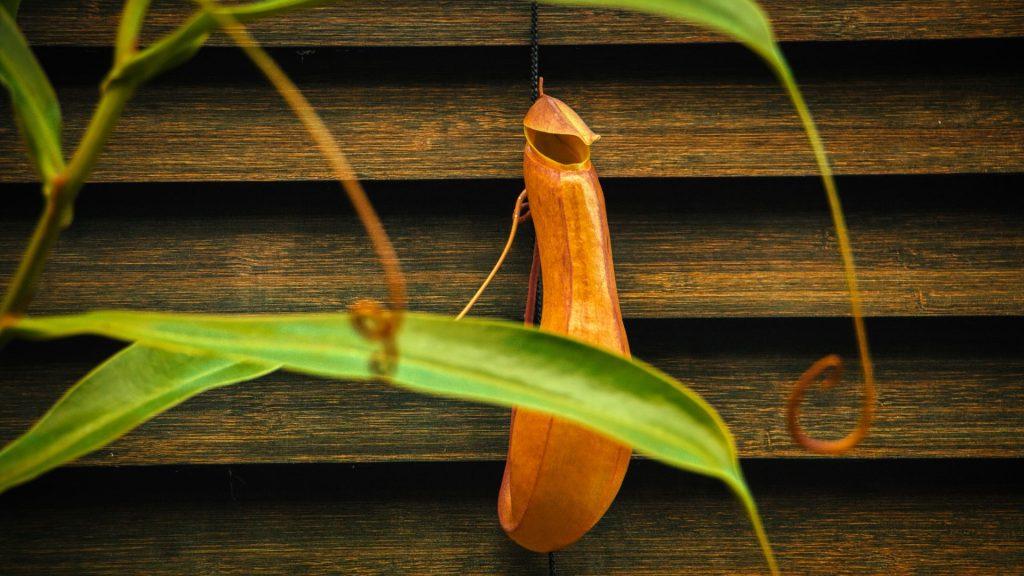
1. Venus Fly Traps – Dionaea Muscipula ‘Snapper’
The Venus Fly Trap is the most well-known carnivorous plant. Native to North and South Carolina, this plant has iconic green, spiked traps. They are used to capture and digest bugs like flies and spiders. This is a unique plant that will add an air of whimsy to your plant collection. Click here to find out more about caring for a Venus Fly Trap.
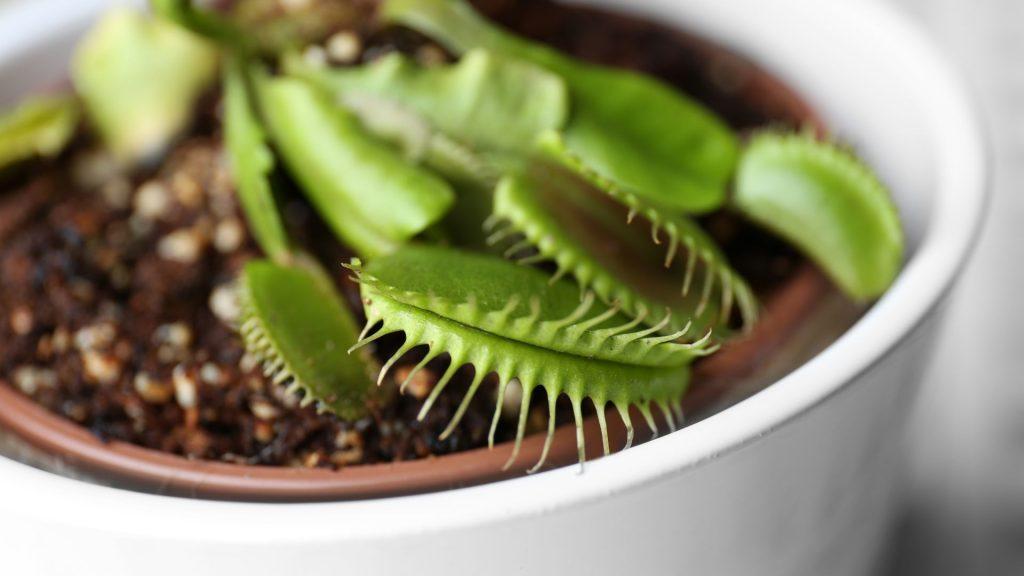
2. Pitcher Plant – Sarracenia
Pitcher plants boast tall, cylindrical prey-trapping mechanisms that give them a unique and fascinating look. The deep cavities of this plant are filled with a liquid that traps and digests insects.
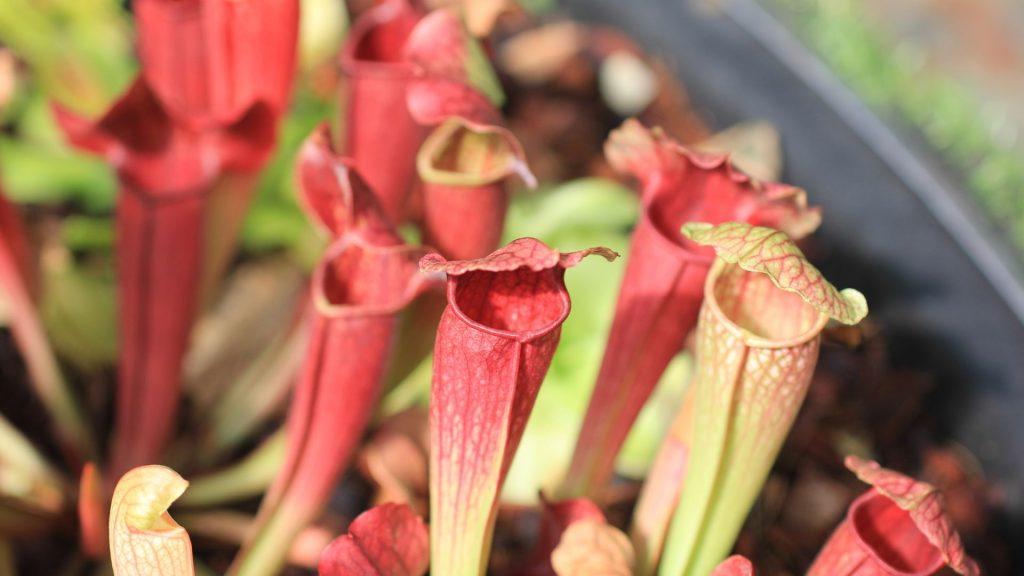
3. Purple Pitcher Plant – Sarracenia purpurea Venosa
The purple Pitcher plant is a captivating member of the Sarracenia family. It has similar tube-shaped pitfall traps, but they are slightly shorter with purple hues and veins. This colourful plant adds a lot of character to a home while also helping to get rid of annoying, unwanted insects.
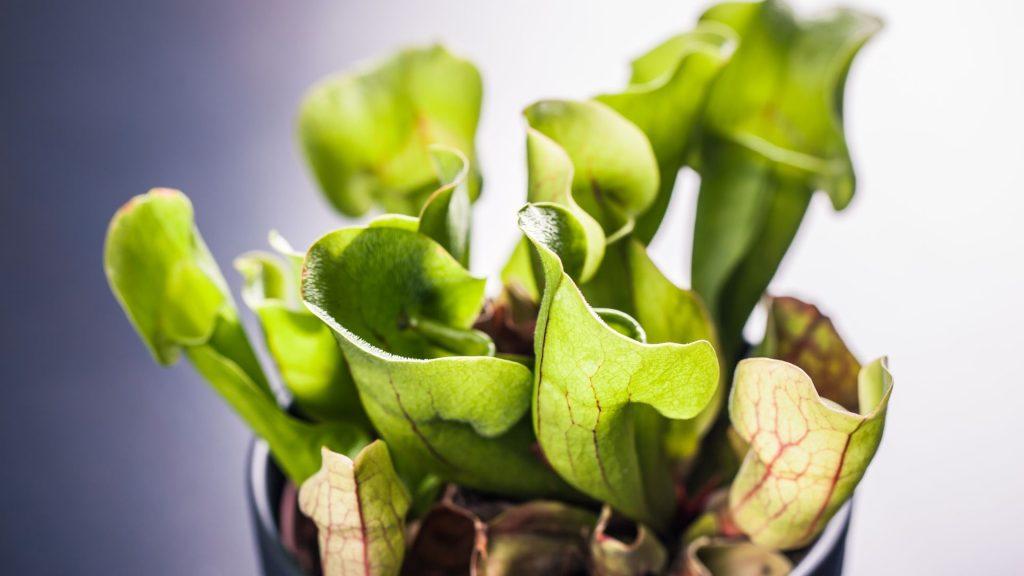
4. Sundew Fly Trap – Drosera
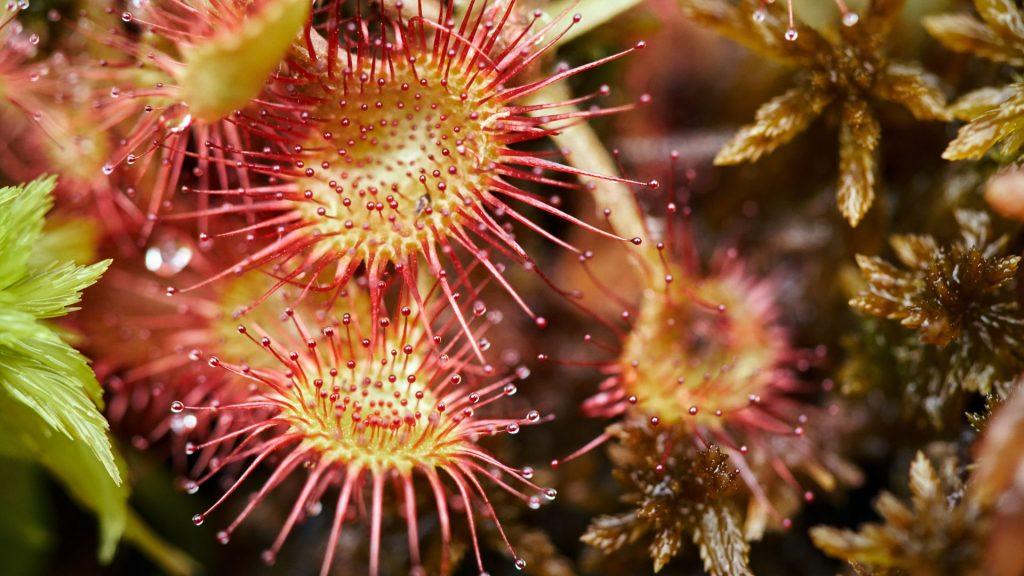
While this plant has a similar name to the Venus Fly Trap, there are a lot of notable differences. Firstly, the trapping mechanism; instead of traps that physically close around prey, the leaves of this plant are covered with little ‘tentacles’ (trichomes) that secrete a sticky liquid. This liquid attracts and catches prey. As a houseplant, Sundew Fly Traps can live for several years as long as the flower stalks are removed as they appear.
5. Monkey Jars – Nepanthes alata
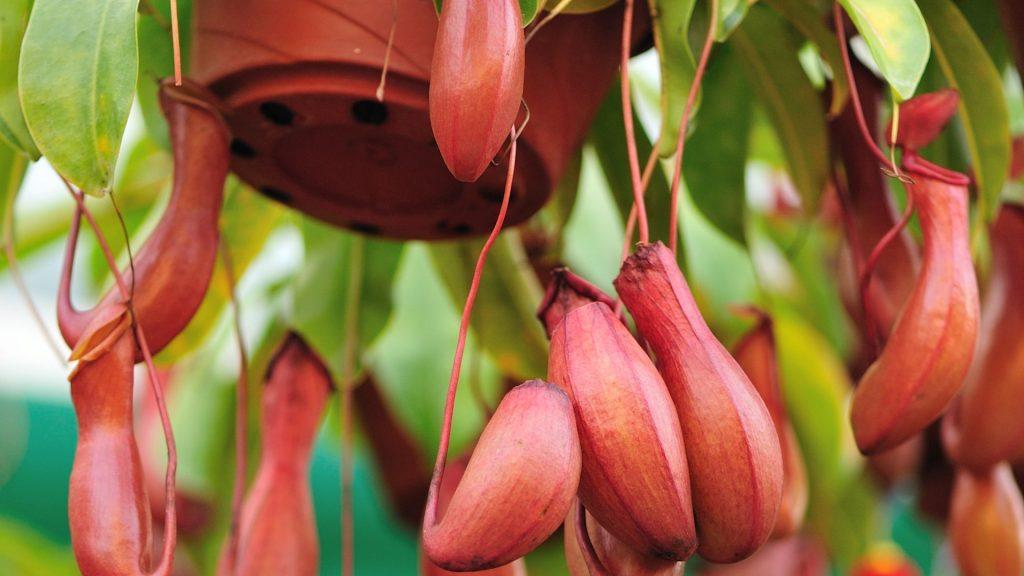
This tropical plant is known as Monkey Jars. It gets this name from the eye-catching pitchers that hang from the crown of green leaves. Reminiscent of hanging jars, these pitchers attract insects with both their bright colours and sweet nectar. This plant makes a gorgeous addition to any home, acting as both a unique hanging plant and a handy pest control tool.
Conclusion
Carnivorous plants are beautiful, unique additions to a plant collection. Click here to read more articles about carnivorous plants and how to care for them.