A spring flowering bulb is one of the most reliable and fuss-free ways to achieve a really colourful spring garden. One of the best things about most spring flowering bulbs is that they’re easy to grow. Plant them in the ground or containers in the autumn and wait for them to emerge a few months later! If you wish to plant your bulbs in late winter (January and February), ensure the ground or container is not frozen and covered with a thicker layer of soil to protect them from harsh, cold weather.
Planting Bulbs
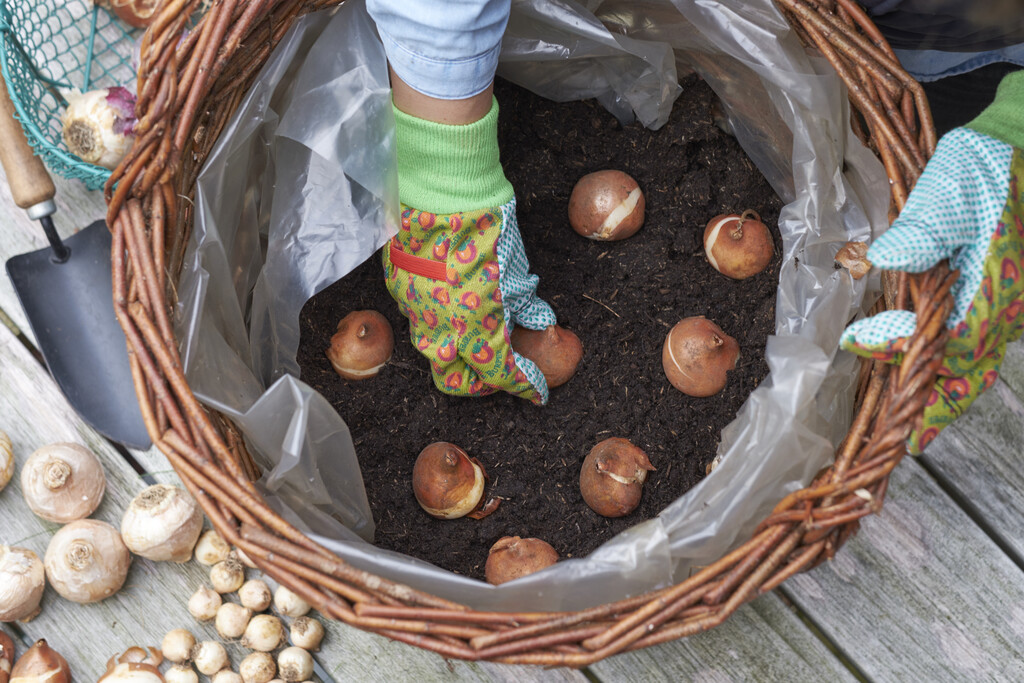
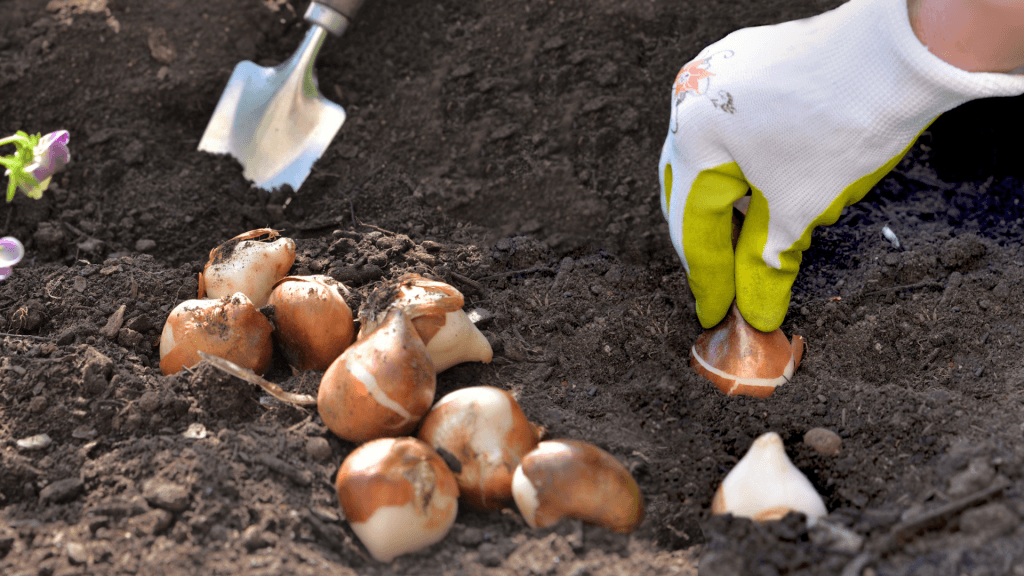
Bulbs usually have a pointy end and a rounded end. The pointed end is where the flower stalk grows from, and the rounded end produces roots. Some roots will be visible on the rounded ends of the bulbs when they arrive. A general rule for planting a bulb is that it should be planted at around 2-3 times its own depth. Some bulbs are bigger than others, meaning larger bulbs will be planted deeper than smaller ones. This means you can choose combinations of large and small bulbs to plant together in ‘layers’ in containers or on the ground.
Heavier Soils
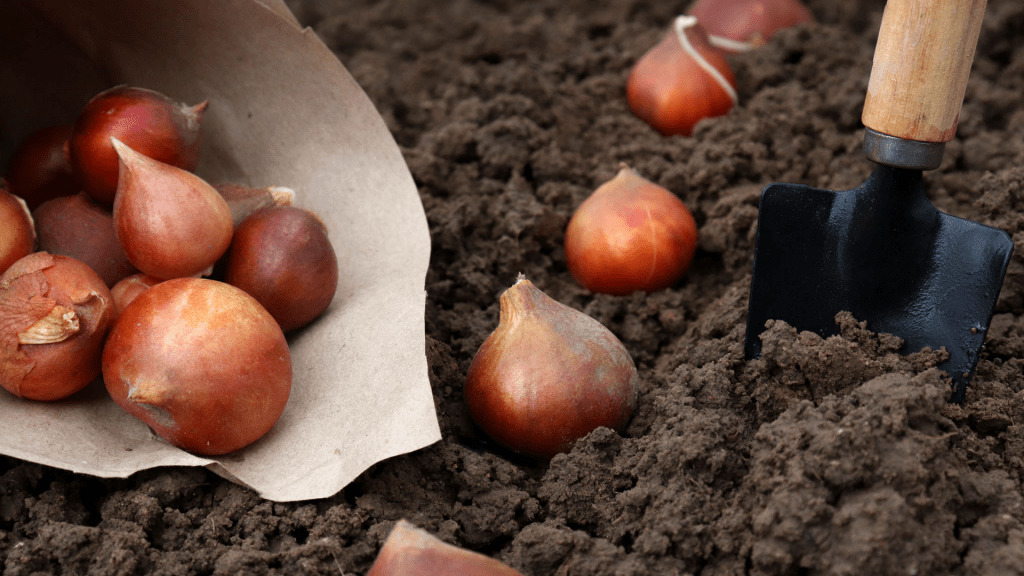
If you have particularly heavy soil, it can be worth adding a bit of sand or grit to your planting holes to help with drainage and prevent the bulb from rotting.
Planting Combinations
It is worth checking flowering times and heights and how different colours will look together when planting combinations of bulbs. This will ensure a great effect if you decide to do a bulb lasagne. If you are not sure about the level of shade in your garden, check out our Plants for shaded gardens guide to learn more.
Bulbs Ongoing Care
Most bulbs are low maintenance and will happily look after themselves. Once their flowers have faded, it’s a good idea to dead-head them to prevent seed heads from forming. The bulb saves energy for next year’s flowers by dead-heading instead of putting it into the seed-forming process. Some people like to cut the foliage off after flowering; however, it should be left intact for at least 6-8 weeks to allow it to continue photosynthesising and putting energy back down to the bulb to enable them to re-grow next year. For the best results, leave the foliage intact until it’s brown.
Safety Note When Planting Bulbs:
Remember that all bulbs can be harmful if consumed. We also recommend wearing gloves when planting a bulb, as some bulbs, such as Hyacinths, may cause skin irritation.
Bulbs Details
| Bulb Type | Planting Depth | Planting Distance | Planting Position | Additional Information |
| Allium | 2-3 times the depth of the bulb | 25-30 cm | Full Sun | Flowers late spring/early summer. Tall varieties sometimes require support. |
| Daffodil/ Narcissus | 2-3 times the depth of the bulb | 15-20 cm | Full Sun, Partial Shade | Perfect for growing through the grass as well as in patio containers. |
| Crocus | 2-3 times the depth of the bulb | 10-15 cm | Full Sun, Partial Shade | The top isn’t always obvious, so it can be planted on their side if unsure. |
| Tulip | 2-3 times the depth of the bulb | 15-20 cm | Full Sun | The top isn’t always obvious, so it can be planted on their side if unsure. |
| Anemone | 5-10 cm | 5-10 cm | Full Sun, Partial Shade, Shade | The bulb is usually large, with a pointy top side and roots underneath. |
| Cyclamen | 2-3 cm | 5-10 cm | Partial Shade, Shade | Plant shallowly with the top visible. Often, the corm has shoots at the top and roots. |
| Eranthis (Winter Aconite) | 2-3 cm | 5-10 cm | Partial Shade, Shade | The top isn’t always obvious, so it can be planted on their side if unsure. |
| Fritillaria Meleagris | 2-3 times the depth of the bulb | 10-15 cm | Partial Shade, Shade | Small bulb with a slightly pointed top. Ideal for woodland planting. |
| Snowdrop | 2-3 times the depth of the bulb | 10-15 cm | Full Sun, Partial Shade, Shade | Plant bulbs in groups for a natural look. Grows well in beds and borders. |
| Bluebell | 10-15 cm | 10-15 cm | Partial Shade, Shade | Create a woodland effect by planting under trees and around shrubs. |
| Muscari | 5-10 cm | 5-10 cm | Partial Shade, Shade | Plant in groups for a big impact and natural look. |
| Ranunculus | 5 cm | 15-20 cm | Full Sun | Plant with the “claws” pointing downwards. |
| Colchicum | 10 cm | 10-15 cm | Full Sun | Flowers Sep-Oct leaves to follow retained until mid-summer. Needs well-drained soil. |
FAQ’s
“The optimal planting time is September to October. If you miss this time gap, you can plant all the way up to late winter so long as the soil is not frozen or waterlogged. You are also able to plant flowering bulbs such as Daffodils, Tulips, Crocuses and Hyacinths all the way to the end of winter, January and February time, so long as they are planted in areas with no frozen soil,” says Chris Bonnett, owner of Gardening Express and gardening expert for The Express.
“Your soil should be loose and well-drained. You can add components such as compost or sawdust to heavy clay or sandy soils to help them keep in more moisture,” says Chris Bonnett, owner of Gardening Express and gardening expert for The Express.
No, you can plant your bulbs in January or February, so long as the ground is not frozen. However, add some extra mulch or compost on top of the bulbs to give them a little more protection from cold weather.
Shop Now