
This article outlines effective methods for planting, nurturing, and maintaining Honeysuckles to promote robust growth and stunning blooms.
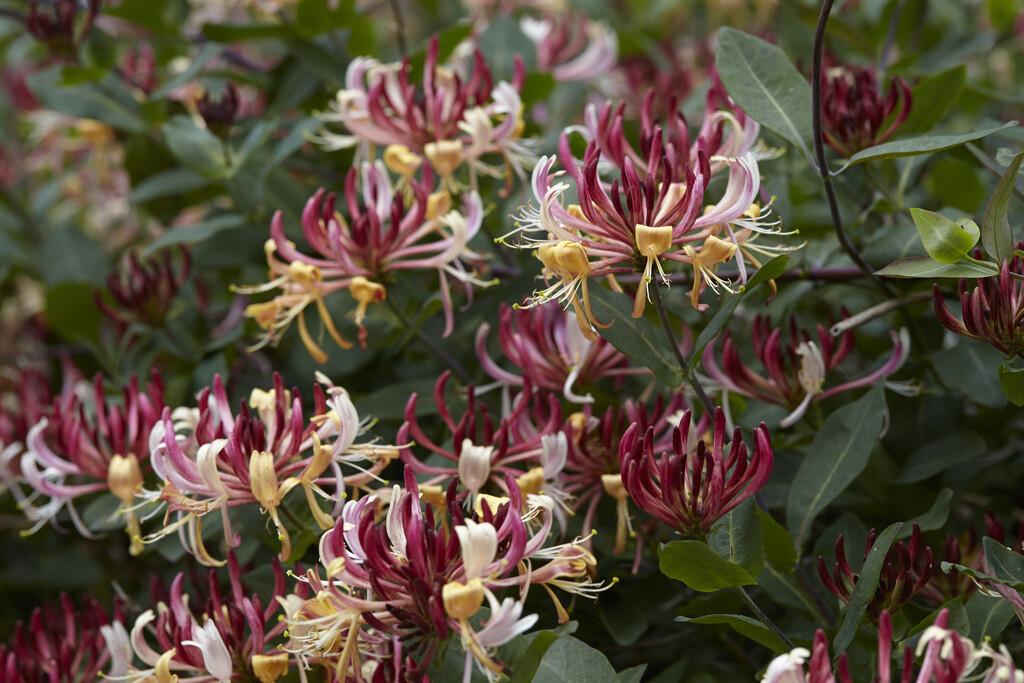
Understanding Honeysuckle: Types of Honeysuckle to Grow
Honeysuckle, belonging to the genus Lonicera, encompasses a variety of species that are loved by gardeners for their vibrant colours and climbing capabilities. Here are some popular Honeysuckle varieties:
Common Honeysuckle (Lonicera periclymenum): A vigorous, late-flowering, deciduous variety. It grows best in light shade.
Japanese Honeysuckle (Lonicera japonica): Known for its vigorous growth and sweetly scented flowers, this vine can quickly cover trellises and fences. It thrives in various conditions but can become invasive in some regions.
Evergreen Honeysuckle (Lonicera henryi): Lonicera Henryi is an evergreen climber that is an excellent alternative to the Ivy if you want some interesting evergreen foliage cover of a wall, fence, or trellis.
Trumpet Honeysuckle (Lonicera sempervirens): Similar to Coral Honeysuckle, this variety is recognized for its trumpet-shaped blooms and ability to thrive in a range of soil types. It is often used in naturalistic landscapes.
Each variety has unique characteristics and growth habits, making them suitable for different landscaping needs, such as ground cover, erosion control, or privacy screening.
Benefits of Growing Honeysuckle
Growing honeysuckle offers numerous benefits:
Attraction of Pollinators: Honeysuckle flowers attract bees, butterflies, and moths, contributing to the overall health of your garden ecosystem.
Aesthetic Appeal: With their vibrant blooms and delightful fragrances, Honeysuckle plants can add a real pop of colour to your garden.
Erosion Control: Honeysuckle’s dense root systems can help stabilize soil and prevent erosion, making it ideal for sloped areas.
Preparing for Planting Honeysuckle
Where to grow Honeysuckle
Selecting the appropriate location is crucial for successful Honeysuckle growth. Consider the following:
Sunlight and Soil Conditions: Honeysuckle generally grows best in partial shade but can tolerate sunnier areas of the garden. It will grow well in most soils so long as they are well-drained. Spil acidity can range from acidic to alkaline.
Drainage and Wind Protection: Ensure that the site has good drainage to prevent root rot. Additionally, consider planting Honeysuckles in areas shielded from harsh winds to promote healthy growth.
Companion Planting Considerations: When planning your Honeysuckle garden, consider what to plant with Honeysuckle. Pairing with other flowering plants can enhance biodiversity and attract more pollinators.
Soil Preparation
Proper soil preparation is essential for optimal Honeysuckle growth:
Recommended Soil Types and pH Levels: Honeysuckle thrives in well-drained soil with a pH level between 5.5 and 8.0. Conducting a soil test can help determine the current pH and nutrient levels.
Improving Soil Quality: Techniques such as composting and mulching can enhance soil structure and fertility, providing a nutrient-rich environment for Honeysuckle.
Importance of Soil Testing: Before planting, it is advisable to test the soil to identify any deficiencies or imbalances that may affect plant health. Soil testing kits are inexpensive and can easily show you the best place to plant your Honeysuckle.
How to plant Honeysuckle
What you’ll need to grow Honeysuckle
To grow your Honeysuckle you will need:
- A hand trowel or border spade, depending on the size of your plant.
- Garden ties to attach to trellising or wires if growing up a wall or a fence
- A watering can to give your Honeysuckle its first drink after planting
- A mulch to spread around the base of the plant to protect it if you’re planting in colder temperatures.
- Good secateurs to maintain the shape of your Honeysuckle when it comes time to prune.
Timing and Planting Your Honeysuckle
The timing and technique of planting Honeysuckle are critical for successful establishment:
Best Time of Year to Plant: Spring or autumn are the ideal seasons for planting Honeysuckle, as the temperatures are moderate, allowing for better root development.
Step-by-Step Instructions:
- Dig a hole twice the width of the root ball and slightly deeper than the root system.
- Place the Honeysuckle plant in the hole, ensuring that the top of the root ball is level with the soil surface.
- Backfill the hole with soil and water thoroughly.
Spacing and Depth: Depending on the variety, Honeysuckles should be spaced around 18 inches apart to allow for adequate air circulation and growth.
Caring for your Honeysuckle
Watering and Fertilizing
Proper watering and fertilization are key to maintaining healthy Honeysuckle plants:
Recommended Watering Schedule: Honeysuckle requires consistent moisture, especially during the first year after planting. Water deeply once a week and then adjust the frequency based on rainfall.
Types of Fertilizers: A balanced fertilizer can be applied in early spring to promote growth. Organic options, such as compost or fish emulsion, are also beneficial.
Signs of Overwatering or Nutrient Deficiency: Yellowing leaves may indicate overwatering, while stunted growth could suggest nutrient deficiency. Adjust care practices accordingly.
How to prune Honeysuckle
Pruning is essential for the overall health and desired shape of Honeysuckle plants:
Importance of Pruning: Regular pruning encourages bushier growth and more abundant flowering. Remove dead or damaged wood and thin out crowded areas.
Best Practices for Seasonal Pruning: Deciduous Honeysuckle can be pruned in late winter or early spring before new growth begins. This timing allows for healthier blooms and foliage. A light trim in late summer or early autumn will also help the current season’s growth.
Pruning method: If your Honeysuckle needs severe pruning, it is best to do this when the plant is dormant during the colder months. Overgrown plants can be cut back to around a foot off the ground, which should grow back quickly and flower in the following spring.
Climbing Honeysuckles that need tidying should be pruned once they have flowered. Using secactuers you can reduce their size by around a third to maintain a neat shape.
Common problems when growing Honeysuckle
Common pests and diseases with honeysuckle
Honeysuckle can be susceptible to various pests and diseases:
Common Pests: Honeysuckle Aphids, thrips, and glasshouse whitefly are all pests that honeysuckles can suffer from. Regularly inspect plants to identify any pests.
Recognizing Diseases: Fungal diseases such as powdery mildew, leaf spot, and silver leaf can affect Honeysuckle. Ensure good air circulation and avoid overhead watering to minimize risk.
Preventative Measures: Healthy plants are less prone to pests and diseases. Maintain proper care and monitor for early signs of trouble.
Environmental Challenges
Honeysuckle may face environmental challenges that affect growth:
Protecting from Extreme Weather: Provide winter protection by mulching around the base of the plant. In extreme heat, ensure adequate watering.
Thriving in Varying Climates: Understanding your USDA plant hardiness zone can guide you in selecting the right Honeysuckle varieties for your region. You can learn more about plant hardiness ratings in module 13 of our Gardening for Beginners Guide.
What to plant with Honeysuckle
When considering companion plants for Honeysuckle, it is best to choose plants that can thrive in similar growing conditions, which for the Honeysuckle is full sun to partial shade and well-drained soil.
Suitable companions could include flowering perennials such as coneflowers (Echinacea) and black-eyed Susans (Rudbeckia), which not only complement the Honeysuckle’s aesthetic appeal but also attract pollinators. Furthermore, consider planting shrubs like viburnum or dogwood nearby, which can provide additional layers of interest and habitat for wildlife.
Where to buy Honeysuckle online
You can find a wide variety of Honeysuckles available to buy online at Gardening Express, including those featured in this article as well as some other varieties not mentioned.
FAQs about Honeysuckles
Many varieties of Honeysuckle are more than happy to grow in the shade. Evergreen varieties like the Lonicera Henryi will thrive in shady spots of the garden.
Some varieties of Honeysuckle produce berries that are not edible and can be considered mildly poisonous to humans and pets. The leaves and flowers are not poisonous.
Yes, honeysuckles can be grown in pots, beds, and borders. Just ensure the pot is large enough to sustain this fast-growing climber and has sufficient drainage.
How do you propagate Honeysuckle?
To propagate honeysuckle, take cuttings of the plant in July and August when the stems are flexible but firm; look for short lateral stems. Keep your cuttings warm but out of direct sunlight, planted in damp compost. Once the roots begin to sprout, you can grow in their own pots.