
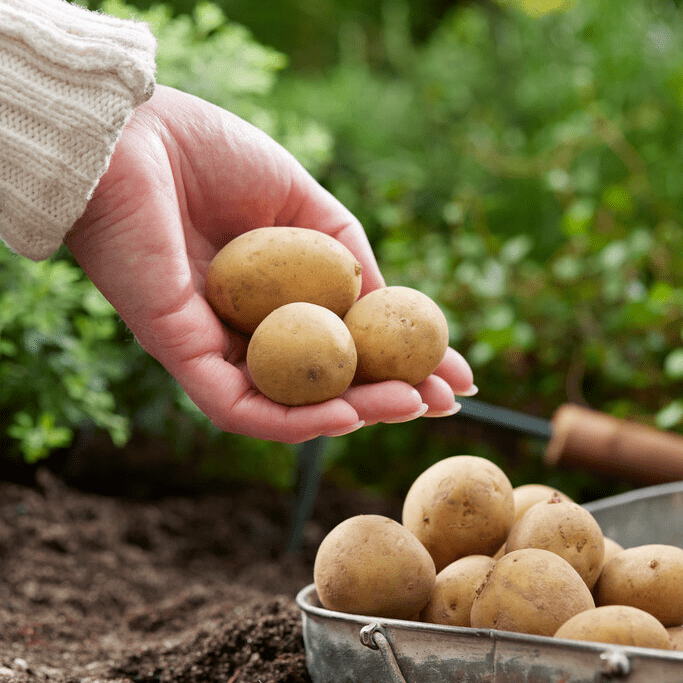
What Are New Potatoes?
New potatoes are young, immature tubers harvested before they reach full maturity. They are characterized by their thin, delicate skins and a creamy, tender texture. Unlike mature potatoes with a starchy and firm consistency, new potatoes offer a sweeter and more subtle flavor, making them a favorite among chefs and home cooks alike.
New potatoes are a great source of vitamins C and B6, potassium, and dietary fiber. They are also lower in calories than their mature counterparts, making them a healthy addition to any meal.
The primary difference between new and mature potatoes is their harvesting time. New potatoes are harvested early in the growing season, while mature potatoes are left in the ground longer to develop a thicker skin, a higher starch content, and usually grow larger. This distinction affects their texture, flavor, and culinary uses.
Choosing the Right Seed Varieties
Popular New Potato Varieties for Home Gardeners
When it comes to growing new potatoes, selecting the right seed variety is crucial. Some popular options include:
- ‘Jazzy’ are known for producing a large number of small tubers with good flavor, a waxy texture, and tasty skin.
- ‘Nicola’ are long oval, smooth-skinned tubers with a wonderful waxy texture. They have superb flavour when boiled and make a great salad potato. These are disease-resistant potatoes.
- ‘Vivaldi‘ produces a good yield of evenly sized tubers. It’s a multipurpose variety with a delicious taste and texture.
When choosing seed new potatoes, consider factors such as disease resistance, growth habit, and flavor profile. Selecting certified seed new potatoes is essential to ensure healthy growth and minimize disease risk.
Preparing for Planting
Soil Requirements for Growing New Potatoes
New potatoes thrive in well-draining, loose soil with a pH level between 5.8 and 6.5. Sandy loam is ideal, as it allows for proper drainage and aeration, which is crucial for healthy tuber development.
Good drainage prevents water from pooling around the roots, which can lead to rot. Aeration allows roots to access oxygen, promoting robust growth. Add organic matter such as compost or well-rotted manure to improve soil conditions.
To amend your soil, test its pH and nutrient levels. If necessary, add lime to raise pH or sulfur to lower it. Incorporate organic matter to enhance soil structure and fertility, ensuring your new potatoes have the best possible start.
The best time to plant new potatoes is typically in early spring, once the soil temperature reaches about 7°C. Depending on your region, this can vary, so consult local planting guides for specific timing.
Different climates may affect planting times. You may plant earlier in warmer regions, while in cooler areas, you might wait until late spring. Pay attention to local frost dates to avoid damage to your young plants. Look for signs such as the soil warming up and the last frost date passing. Additionally, if you see buds forming on your seed potatoes (a process known as chitting new potatoes), it’s a good indication that they are ready to be planted.
Learn more about planting seed potatoes in our complete guide.
Cultivating New Potatoes
Consistent moisture is vital for growing new potatoes. Aim to keep the soil evenly moist, especially during tuber formation. Water deeply but infrequently to encourage deep root growth. Mulching can help retain moisture and suppress weeds. Signs of overwatering include yellowing leaves and wilting, while underwatering may cause leaf curling and stunted growth. Adjust your watering schedule accordingly.
Rotate crops yearly to prevent soil-borne diseases and ensure good air circulation around plants. Avoid planting in wet areas to minimize the risk of blight and rot.
Harvesting and Storing New Potatoes
New potatoes are typically ready for harvest about 10-12 weeks after planting, when the plants begin to flower. For the best flavor, harvest them when they are still small and tender. Use a garden fork or spade to gently lift the tubers from the soil, being careful not to break the potato skins.
Handle harvested potatoes gently to avoid bruising and transport them in breathable containers to prevent moisture buildup. New potatoes should be stored in a cool, dark place with good ventilation. Avoid washing them until you are ready to use them, as moisture can speed up spoiling,
The ideal storage temperature for new potatoes is around 7°C. Keeping them away from direct sunlight and humidity will help extend their shelf life. Sitting the potatoes in a dark, humid environment for a few days will help toughen the skins, a process called curing, which will also improve shelf life.
New potatoes can be stored for about 2-3 weeks. Signs of spoilage include soft spots, sprouting, or a foul odor. Discard any affected potatoes to prevent spoilage from spreading.
Check out our guides on harvesting and storing your crops for more information.