
Whether you’re a beginner or an experienced gardener, you’ll find valuable tips and tricks to ensure a bountiful harvest of crisp, delicious cucumbers. Below are the best practices for nurturing these refreshing vegetables from seed to table!
Types of Cucumbers to Grow
Cucumbers are a common garden vegetable and much loved by growers thanks to their ease of care and the different varieties available. Different varieties will lend themselves to particular culinary uses more than others, and can slightly differ in their care needs. The most popular varieties include:
- Slicing Cucumbers: These are the standard English cucumbers that you will find in the supermarket or at your local green grocer, typically long and smooth-skinned. They are perfect for slicing into salads and sandwiches due to their crisp texture and mild flavour.
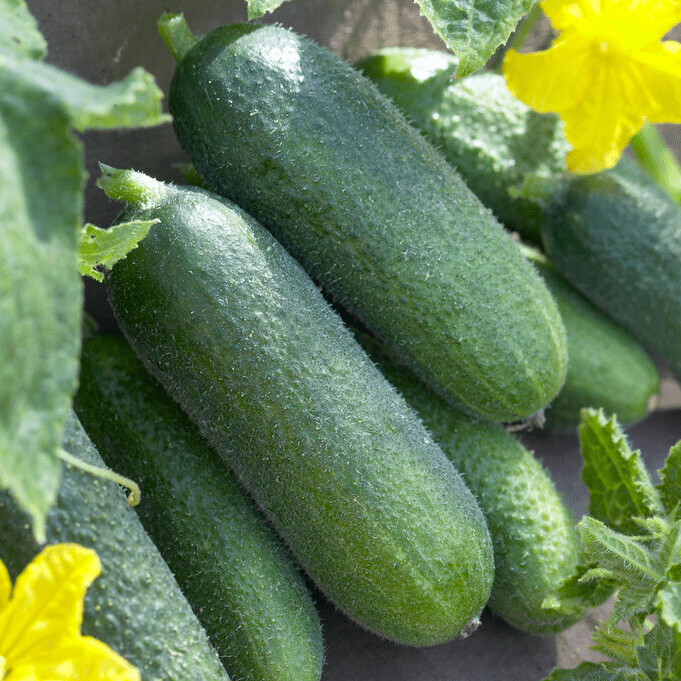
- Pickling Cucumbers: Smaller and bumpier than slicing cucumbers, pickling cucumbers are specifically bred for preservation. Their firm flesh holds up well during the pickling process, making them perfect for homemade gherkins.
- Burpless Cucumbers: Known for their mild taste and lack of bitterness, burpless cucumbers are easier on the stomach. They are often enjoyed raw in salads or as snacks.
Your choice of cucumber will ultimately come down to what you want to use it for. Maybe you’re looking for a homegrown alternative to shop-bought gherkins, or maybe you’re wanting to save money on the weekly shop.
When and How to Plant Cucumbers
The best time to plant cucumbers varies by variety and climate, but generally, they should be planted after the last frost date when soil temperatures reach at least 21°C.
Growing Cucumber from seeds
If you have a greenhouse, cucumber seeds will grow best indoors and fruit sooner as they are protected from the elements and pests. Simply fill small pots, around 10cm in size, with compost, place one seed in each pot around a centimetre deep, and then water well.
If your greenhouse is heated, you can begin sowing your cucumber plants in mid-February. However, if it is unheated or you use a cold frame, you will want to wait until it warms up around April.
Some cucumber seeds can be sown directly outside. You will want to wait until it is a lot warmer in late May. The process is the same as sowing inside.
Growing Cucumber from seedling plants
If you have already purchased sprouted cucumber plants, like the ones from our website, start here for planting instructions.
If you have grown seedlings in a greenhouse, you’ll want to transplant them into larger pots or outside into a vegetable garden once the weather warms up around May/June. You’ll want to harden these off before putting them outside to ensure they acclimate. To do this, return the plants to the greenhouse or covering at night, and bring them out the next morning. If the weather is much colder, you may just want to leave them outside for a few hours in the initial week. If you have purchased cucumber plants from our website, then this process will not be necessary.
If planting in a pot or a container, choose one at least 30cm deep and the same width, filled with compost. Transplant your seedlings and press in, then water well.
If you’re planting your cucumber plants straight into the ground, such as in a vegetable patch, space the plants at least 30cm apart and water well.
Cucumbers are climbing plants, so they will need support when growing. Secure the growing shoots to strong bamboo canes. Be sure to check your supports as the cucumbers grow; they may need additional support, especially once they begin to produce fruit.
Watering Your Cucumber Plants
Cucumbers require consistent moisture, especially during their early growth stages.
Water cucumbers deeply once or twice a week, depending on rainfall and soil moisture levels and adjust your watering schedule appropriately. It is best to water the soil, rather than the foliage, to avoid fungal buildup during damp weather.
Ensure the soil is moist but not soggy, as overwatering can lead to root rot.
How long do Cucumbers take to grow?
Cucumbers generally take between 2 and 3 months to grow from seed to harvest. This will, of course, depend on the method of growth and the weather conditions you have experienced during their growth. Once your cucumbers have grown fruit, continuous harvesting will mean you can keep the fruits coming throughout the growing season.
How big do Cucumbers grow?
Different varieties of cucumbers grow to different sizes, so it will depend on the type that you have planted. Common English-style slicing cucumbers will generally grow to around 20-30cm in length. Once they have reached this size, they are usually ready to harvest. Just be sure to check that they are fully green and firm to the touch before harvesting.
Smaller varieties, like gherkins, will reach around 5cm long. Again, at this length, they are usually ready to harvest.
Common Cucumber Pests and Diseases
Cucumbers are generally easy to grow and will be consistently productive in your vegetable garden; however, they can be susceptible to disease.
Powdery mildew is likely to be the most common issue, especially if grown in a greenhouse. To combat this, ensure your plants have good ventilation and air circulation around the foliage.
Other issues include spider mites and the much more serious mosaic virus, which, if it afflicts your cucumbers, will mean they have to be destroyed
Companion planting is one way to combat pests. Consider planting marigolds or nasturtiums nearby, as they can deter pests and promote healthy growth.
There are also a number of varieties of cucumber which are disease-resistant. Marketmore and Spacemaster are resistant to both powdery mildew and mosaic disease, while Tasty Green is resistant to powdery mildew thanks to the way it grows/
When to Harvest Cucumbers?
Depending on when you planted your cucumber, the fruits will generally be ready to harvest from around June onward. Fruits can ripen at different times, and grow quickly, so be sure to check your cucumbers regularly in the late summer months.
Harvest cucumbers when they are at their ripest, fully green and firm to the touch. If they begin to yellow or feel soft, then they may be overripe.
Harvest using a sharp knife or scissors to cut the fruit from the plant, rather than pulling it off. Harvest your cucumber just before you want to eat it for maximum flavour and the best texture.
How to store cucumber once it has been harvested?
Once harvested, cucumbers can be stored if you don’t want to eat them right away. To ensure they stay their freshest for as long as possible, store them in the fridge in the salad or crisper drawer if you have one. Alternatively, placing them in a breathable container can keep them fresh for longer.
Whole cucumbers can generally last up to a week in the fridge, while if they’re sliced and cut up, they should generally be eaten within a couple of days.
The best method to keep cucumbers for the longest time would be to pickle them and keep them in sealed jars. Once this has been done, pickled cucumbers can last many months, so long as the container is airtight.
Conclusion
In conclusion, understanding the various aspects of planting and growing cucumbers is essential for any gardener. From selecting the right variety to managing pests and diseases, each step plays a vital role in ensuring a successful harvest. With the right knowledge and practices, you can enjoy the crisp, refreshing taste of homegrown cucumbers all season long.