
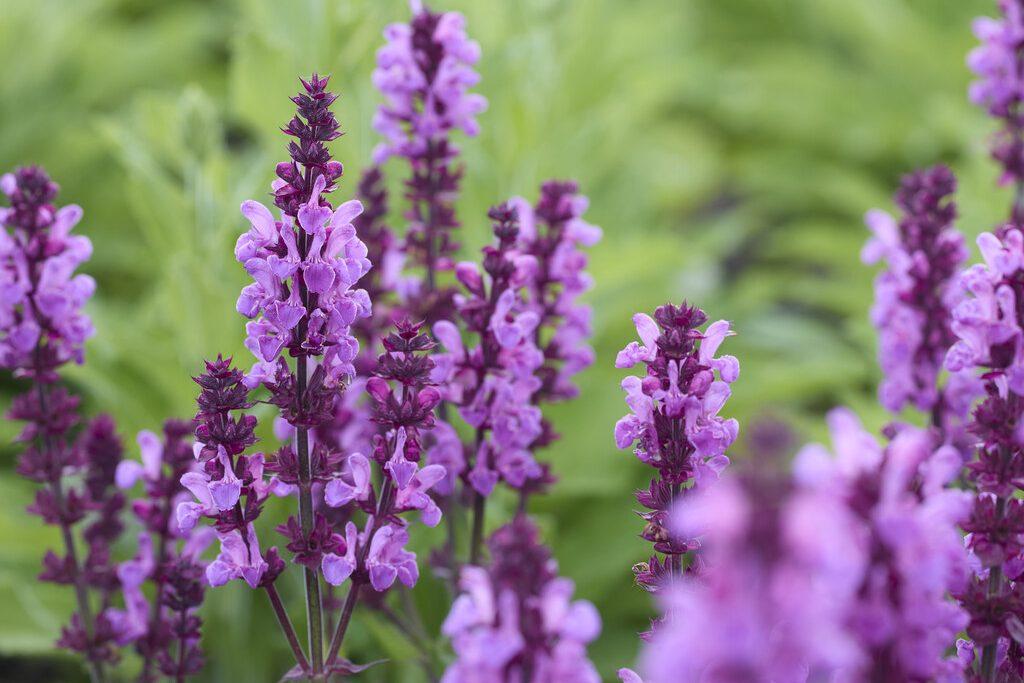
Whether a seasoned gardener or a beginner, learn how to cultivate these beautiful, aromatic plants to enhance your outdoor space and attract pollinators.
Salvia, commonly known as sage, is a colourful and must-have addition to any summer garden. With its stunning flowers and aromatic foliage, Salvia adds aesthetic benefits to outdoor spaces and plays a crucial role in attracting pollinators such as bees and butterflies. This makes it an excellent choice for gardeners looking to create a thriving ecosystem.
Varieties of Salvia
Salvia come in several varieties and colours to suit your garden style and design.
Salvia nemorosa: Known for its tall spikes of purple flowers, this plant is a favourite among gardeners because of its hardiness and ability to thrive in various conditions.
Salvia officinalis: Known as common sage, it is recommended for beginners due to its ease of care and culinary uses. Sage is a great starter herb for the garden and goes with many dishes.
Salvia Amistad: An extremely popular variety with a long flowering period (late spring to mid autumn) and also produces larger than usual purple flowers, making it a real standout option in the garden.
Salvia × jamensis ‘Hot Lips’: A common sight in many UK gardens, this variety of plant displays striking red and white bi-coloured blooms on spikes. It flowers from June through mid-autumn, and the foliage produces an attractive aroma.
Planting Salvia
As with any plant, ensuring you have the correct soil conditions for what you want to plant is key to ensuring healthy growth. Salvia thrives in well-draining soil, so pick an area of the garden that doesn’t get waterlogged or in a raised bed with good drainage. Why not try a pot on the patio where the drainage can be controlled more easily? Additionally, incorporating organic matter can enhance soil fertility wherever you plant your Salvia.
It is also important to be aware of the sunny spots in your garden when planting Salvia, as they prefer to receive good amounts of full sun exposure to help them grow their best. If you’re planting a row of Salvia, ensure there is enough space between them to allow them to grow properly, at least 30cm, as once established the can grow quite bushy and large.
How to care for Salvia
Once established and planted in the ground, Salvias are relatively easy to maintain and largely take care of their watering needs from rainwater. However, if they are newly planted, we are experiencing a particularly dry spell, or they are planted in a pot, then they will need regular and deep watering. Ensure the soil dries out in between watering spells to ensure the roots do not become rotten.
Once summer is over, and winter is on the way, you’ll want to think about protecting your Salvia from the cold temperatures. Using a mulch like compost or manure around tender plants will help protect them during the winter. Similarly, you can hold off cutting back your Salvia until late spring, which will mean the foliage can provide some protection for the plant instead of leaving it bare.
Pruning Salvia
When to Prune Salvia
Depending on the environment of your garden, the best time to prune Salvia may vary. As mentioned, if you are in a particularly cold and exposed location during the winter months, it may be best not to prune your Salvia until late spring to provide a bit more protection for your plants. However, if you are in a warmer part of the UK, Salvia can be pruned back down to the stems after the summer, once they have finished flowering, ready to come back the following year.
How to prune Salvia
You can be quite robust when pruning Salvia, and it is a good idea to be to ensure they stay somewhat under control. Herbaceous varieties, like the popular ‘Amistad’, can be cut back to their stems through the winter, then right down to the first shoots at the base of the plant in spring, ready for them to spring into life again over the summer.
Other popular varieties like ‘Nemerosa’ can simply have the old growth cut back after the last frosts in spring, ready for new growth in the summer. These varieties often flower quite early, so they can be cut down again in early summer for another round of blooming in midsummer. Perfect summer conditions could even give you a third bloom!
How to deadhead Salvia
Deadheading Salvia can be done throughout the growing season. Salvia flowers grow on tall spikes that rise from the plant’s foliage. As the season goes on, these will eventually fade. This is perfectly normal, and all you’ll need to do is snip off these faded stalks with sharp garden scissors.
By doing this, the Salvia will redirect its energy to producing new flower spikes, meaning the plant will bloom for longer, and keep looking its best.
Conclusion
In summary, growing Salvia offers numerous benefits, including attracting pollinators and enhancing the beauty of your garden. You can cultivate these stunning plants successfully with the right variety, soil conditions, and care. We encourage all seasoned or novice gardeners to incorporate Salvia into their gardens.