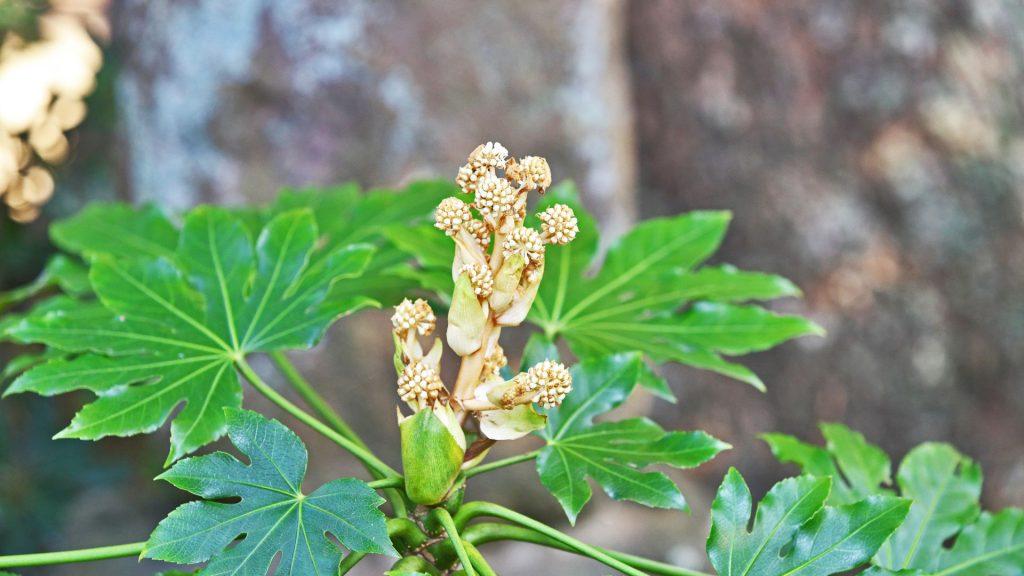
Evergreen shrubs are versatile must-haves in all gardens. Fatsia japonica is one beautiful example, with large, striking leaves that last all year round. This plant is grown as an outdoor shrub as well as a houseplant, adding to its versatility. Read this article to learn all about caring for your own Fatsia japonica.
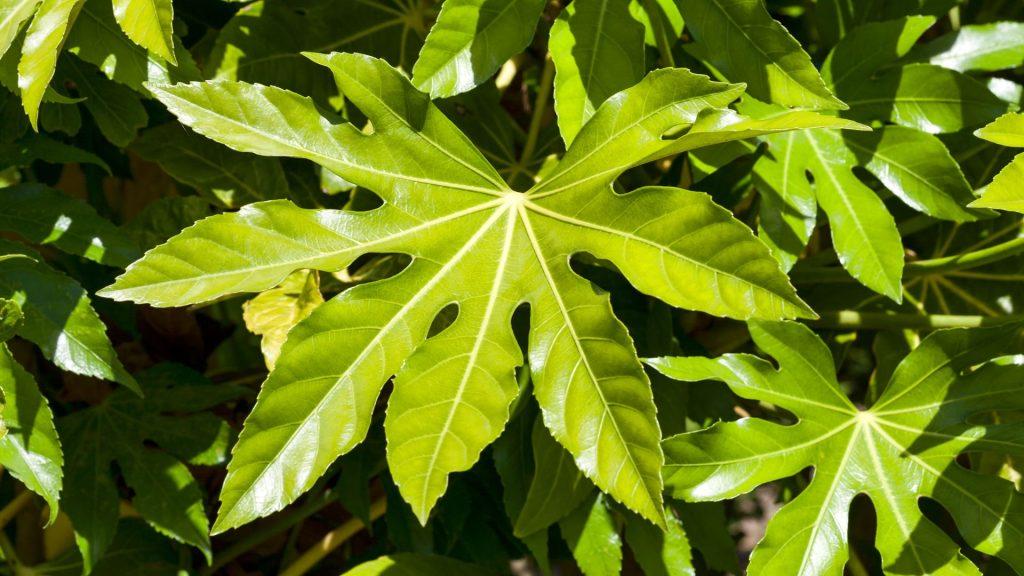
| Common Name | Japanese Aralia |
| Botanical Name | Fatsia japonica |
| Family | Araliaceae |
| Plant Type | Evergreen shrub |
| Mature Size | 2-3m tall, 2.5m wide |
| Sun Exposure | Partial shade |
| Soil Type | Moist, well-drained |
| Soil pH | Neutral-acidic |
| Toxicity | Non-toxic |
| Spring | Summer | Autumn | Winter | |
| Flower | ||||
| Foliage | ||||
| Fruit |
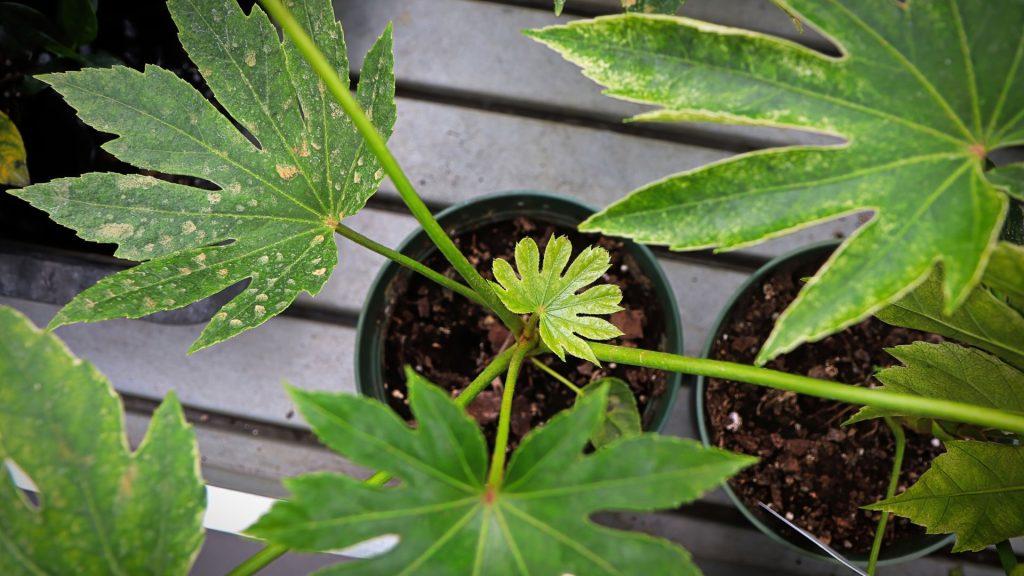
Plant Care
Light
Both indoors and outdoors, Fatsia should be grown in partial shade to avoid paling from direct sunlight. These plants will even grow well in full shade, but will thrive in indirect sunlight and partial shade.
Soil
While Fatsia will grow in most soils, it will thrive in a fertile, slightly acidic soil. Make sure that the soil is well-draining and doesn’t get easily waterlogged.
Water
When growing outdoors, thoroughly water after planting and make sure to keep the soil moist throughout the first year of growth. Once established in the ground, however, this plant can withstand some drought. Indoors, regularly check the soil and water the plant when the top few inches have dried out.
Temperature/Humidity
Fatsia thrives in warmer regions but survives well in most climates, not requiring any extra humidity. Indoor plants, however, will benefit from being sprayed every now and then to remove dust or dirt that would usually be taken care of by the rain.
Common Problems, Pests, & Diseases
Fatsia, while quite hardy plants, can be susceptible to attack from various pests such as:
Scale insects
These are little sap-sucking insects that get their name from the scale-like appearance of the adult bugs. While small infestations can be tolerated, bigger populations can weaken the plant.
Thrips
Thrips are small (up to 2mm long) bugs also known as thunderflies. They feed on flowers and – more relevant to Fatsia – the upper surfaces of leaves.
Mealybugs
More of an issue on indoor-grown Fatsias, mealybugs are another example of sap-sucking insects that can weaken your plants.
Yellowing leaves
Yellowing leaves could be a sign of issues with soil. Check your soil quality and the health of the roots. It could also be a result of sun stress from overexposure to sunlight.
Seasonal Care
Spring
- Plant out
- Repot
- Prune if necessary
Summer
- Keep regularly watered
- Propagate with semi-ripe cuttings late in the season
Autumn
- Start to reduce watering as the weather cools
Winter
- Remove any dead or damaged leaves
Frequently Asked Questions
Pruning isn’t essential for this plant, but it may help to boost growth and neaten the shape.
Yes, there are many different varieties of Fatsia japonica. One popular variety is ‘Spider’s Web’, with striking white patterns.