
This care guide outlines everything you need to know for growing and caring for Albizia, from ideal planting conditions and soil requirements to watering, pruning, and pest control. Learn how to nurture these beautiful, fast-growing trees that provide stunning feathery blooms, making them a perfect addition to any garden.
Plant Summary: Albizia Julibrissin
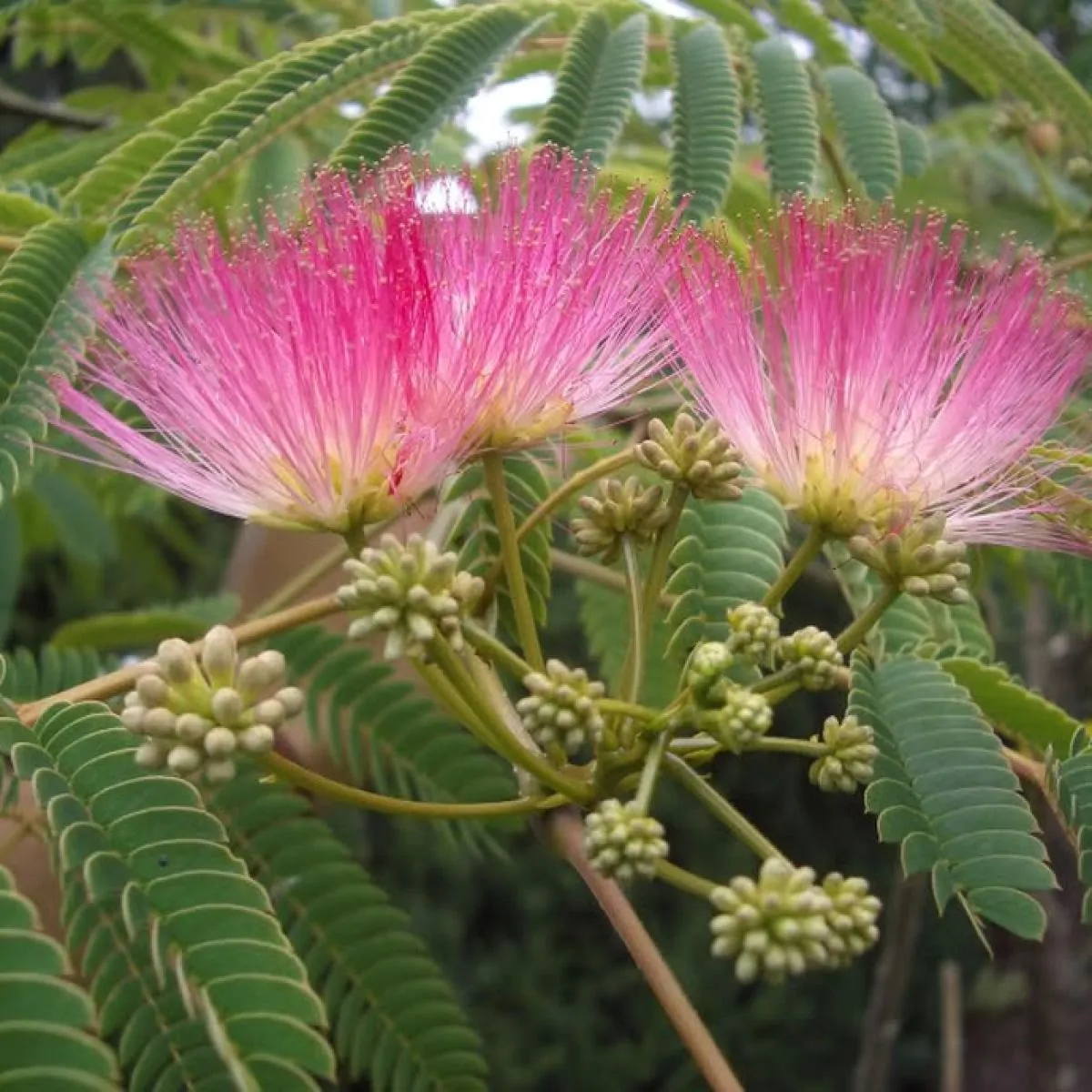
Albizia Julibrissin, commonly known as the Silk Tree or Persian Silk Tree, is a stunning deciduous tree renowned for its feathery pink blooms and delicate foliage. It is originally native to regions of Iran that were formally Persia, as well as regions of China and Korea. The leaves are bipinnate and feather-like, giving them a fern-like appearance, while the flowers are fluffy, pink pom-poms that bloom in summer and attract pollinators like bees and butterflies.
Silk trees can grow up to 8 meters tall at their most mature, and their foliage can spread up to 4 meters, making them an excellent choice for providing shade in larger gardens. They thrive in USDA hardiness zones 4 and are suitable for growth in most areas of the UK.
Ideal Growing Conditions for Albizia
Understanding their ideal conditions is crucial to grow and care for Albizia successfully.
Where to plant albizia
Albizia prefers well-drained, chalky, sandy, or loamy soil and is happy in alkaline and acidic soils. Ensure the soil is rich in organic matter for optimal growth. This tree will flourish in full sun, so aim for around 6 hours of sunlight a day. Given their size, plant Albizia at least 5 meters away from structures and other trees to allow for adequate growth and airflow.
When to plant Albizia
These fast-growing trees are best planted in the spring once frosty weather has subsided.
Types of Albizia (Silk Trees)
There are several varieties of Albizia, including:
- Albizia Julibrissin ‘Rosea’: This variety is known for its bright pink blooms and arching foliage. It is a slightly smaller variety native to areas of Korea and China and is more tolerant to the cold.
- Albizia Julibrissin ‘Ombrella’: This variety, native to France, features a more compact growth habit, making it suitable for smaller gardens. Its name derives from its umbrella-shaped crown, draped in cherry pink blooms.
- Albizia Julibrissin ‘Summer Chocolate’: This variety has dark purple foliage that adds a unique color to your garden and is an alternative colour option to the other varieties of Albizia. The purple foliage provides a stunning backdrop to those signature pink blooms Albizias are loved for.
Essential Care Tips for Albizia
How to water and feed Albizia
Proper watering and fertilization are key to the health of your Albizia. Newly planted trees need to be watered frequently to establish their root systems. During dry spells, water deeply once a week. To encourage growth, apply a balanced fertiliser in the early spring. Seek out a formula with equal amounts of potassium, phosphorus, and nitrogen. While withering leaves could indicate underwatering, yellowing leaves may indicate overwatering. Make the necessary adjustments to your watering schedule.
How to prune an Albizia tree
Lightly pruning helps to maintain the shape and health of your Albizia. Cut off dead, diseased, or crossing branches to increase light penetration and air circulation. Prune in the late winter or early spring before new growth starts. Make clean cuts with sharp, clean equipment. To improve the tree’s natural shape, look for a central leader branch, which can create a sturdy framework and remove any crowded sections of branches.
Pest Management and Disease Prevention
Albizias are generally free from garden pests but can sometimes be susceptible to diseases. Watch for signs of fungal infections, like honey fungus and verticillium wilt. Remove affected branches and avoid moving contaminated soil to other areas of the garden. Regularly inspect your trees and maintain proper watering and fertilization to enhance their resilience.
Care summary for Albizia
In summary, caring for Albizia requires attention to their growing conditions, watering, pruning, and disease management. Ensure the shrub is planted in well-drained soil in a sunny but sheltered area of your garden. Allow ample room for the stunning tree to blossom into a focal point of your garden.
FAQs
Yes, they can be grown in pots, but this will restrict their overall size. Choose a large container, fill it with soil, and give it plenty of sunlight. Bear in mind that the roots of this tree grow fairly quickly, so you will need to remove them from their pots yearly to trim the roots and add more soil. Alternatively, you can place them in a larger pot to allow them to grow taller.
This tree is a deciduous tree, meaning it will lose its leaves in the autumn as it starts to get cold. These will return when the weather warms up.