
Due to their large, showy blossoms, Magnolia trees and shrubs hold a special place in gardeners’ hearts. Read below how you can enjoy including Magnolia flowers in your food and drink.
Culinary History of Magnolia Trees
Pickled Magnolia flowers have been used as a condiment in East Asian cusinine since the late 19th Century. U.P. Hendrick noted in his 1972 edited version of “Edible Plants of the World” that Magnolia flowers were pickled in some parts of Devonshire.
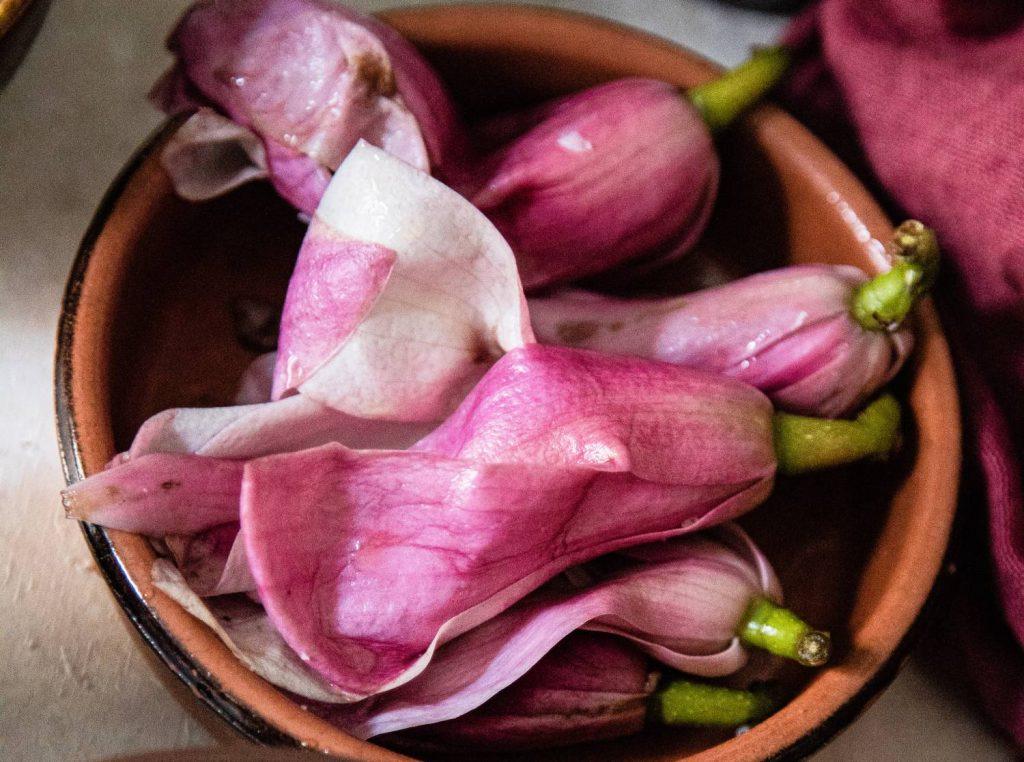
Varieties of Magnolia that are Edible
Edible species include Magnolia grandiflora, Magnolia kobus, and Magnolia × soulangeana. Always confirm what varieties you have before consumption and start with smaller quantities.
Planting and caring for Magnolia Trees
Magnolia trees prefer to grow in full sun to partial shade with moist, well-drained soil. hardy species can tolerate cooler
Best practices for Harvesting Magnolia Flowers
Fresh Magnolia petals should be used soon after harvesting to ensure you enjoys them at their best. Magnolia flowers can also be pickled or preserved in syrups if you wish to store them for longer.
Culinary uses of Magnolia Flowers
Pickled Magnolia petals are a popular condiment in East Asia, where the petals are brined in a sweet vinegar. Read the following Guardian article on how to pickle Magnolia petals. An alternative Jamie Oliver pickled Magnolia recipe can be found here
Magnolia is a popular plant for use in teas where the petals are steeped in hot water, producing a lightly floral and spicy tea.
Magnolia petals are also infused with cream to produce an attractive ice cream.