
This comprehensive blog post covers everything you need to know about selecting the right containers, preparing the soil, choosing the best potato varieties, and maintaining your crop for a bountiful harvest. Whether you’re a seasoned gardener or a beginner, you’ll find valuable tips and techniques to cultivate delicious, homegrown potatoes in limited spaces successfully.
Why Grow Potatoes in Containers, Pots, and Raised Beds?
Growing potatoes in containers, pots, and raised beds is an excellent choice for gardeners with limited space in the garden or even no garden at all. Container gardening allows you to grow potatoes even in small areas like balconies or patios. This method is perfect for urban gardeners who want to enjoy homegrown produce without needing a traditional garden plot or vegetable patch.
Containers and raised beds also provide much better drainage and aeration control than traditional garden soil. This is crucial for potatoes, as they thrive in well-drained soil to prevent rot and disease. This makes containers and raised beds an ideal choice for those with poor drainage in their gardens or particularly thick and clay-like soil.
With containers and raised beds, you can also more easily control weeds and pests thanks to the elevated height and smaller growing areas. Containers and pots can also be moved to sunny spots, making it easier to manage your potato plants if the whole of your garden is not blessed with sunlight all day.
Selecting the Right Containers and Pots
When it comes to growing potatoes in containers, the choice of pot or container is essential. You can use various containers such as large pots, fabric grow bags, or anything big enough to hold soil. The key is to ensure they are deep enough to accommodate the growing potato tubers. A container should be at least 30cm inches deep and 45cm wide for optimal growth.
Materials like plastic, wood, or fabric are suitable, but ensure they are durable enough to withstand outdoor conditions. Make sure your containers have drainage holes to prevent waterlogging. You can also add a layer of gravel or stones at the bottom of the container to enhance drainage and aeration.
Preparing for Planting Potatoes
Choosing the Best Potato Varieties
Selecting the right seed potatoes is crucial for a successful harvest. Growing potatoes in pots and containers gives you limited space, so you may choose smaller potatoes to maximise your harvest.
Varieties of ‘New potatoes’ can be a great option for the gardener with limited space. Some popular options include ‘Jazzy,’ which is known for producing a large number of small tubers with good flavor, a waxy texture, and tasty skin. ‘Nicola’ are long, oval, smooth-skinned tubers with a wonderful waxy texture. ‘Vivaldi‘ produces a good yield of evenly sized tubers. It’s a multipurpose variety with a delicious taste and texture. You can read more in our full guide to growing new potatoes (LINK)
However, growing in a larger container or in a raised bed gives you more options for the types of potatoes you can grow. Really, any kind of seed potato will grow just as well in a raised bed as it will in the ground, providing the growing conditions are correct.
Soil Preparation and Fertilization
The foundation of successful potato growing lies in the soil. Potatoes thrive in loose, well-draining soil rich in organic matter. Quality soil promotes healthy root development and nutrient uptake. Before planting, add compost to your soil mix to enrich it, and ensure your potatoes have enough nutrients to produce a good harvest. You can also use a balanced fertiliser to support healthy growth during the growing season.
Planting and Caring for Your Potatoes in Pots and Containers
Follow these steps for planting seed potatoes in containers:
Prepare your container by adding a layer of soil mix and ensuring there is good drainage from the pot. Adding stones or gravel to the bottom of the container can assist with this. Depending on the size of your seed potatoes, you may want to cut them in half, but ensure each piece has at least one ‘eye’ so that it can grow.
Place the seed potatoes on top of the soil and cover them with soil. Space your seed potatoes about 30cm apart to allow for proper tuber development. A depth of 30cm is ideal for early potatoes. Plant your potatoes in early spring once the soil temperature reaches around 7°C. This timing helps ensure a bountiful harvest.
You can read our full guide on growing seed potatoes here.
Maintenance and Harvesting Tips
Potatoes need consistent moisture, so water them regularly, especially during dry spells. They thrive in full sun, so choose a location that receives around 6 hours of sunlight daily. Look for common pests like aphids and diseases like ring rot and root rot. Early detection is key to managing these issues. Look for yellowing leaves or wilting, which can indicate disease.
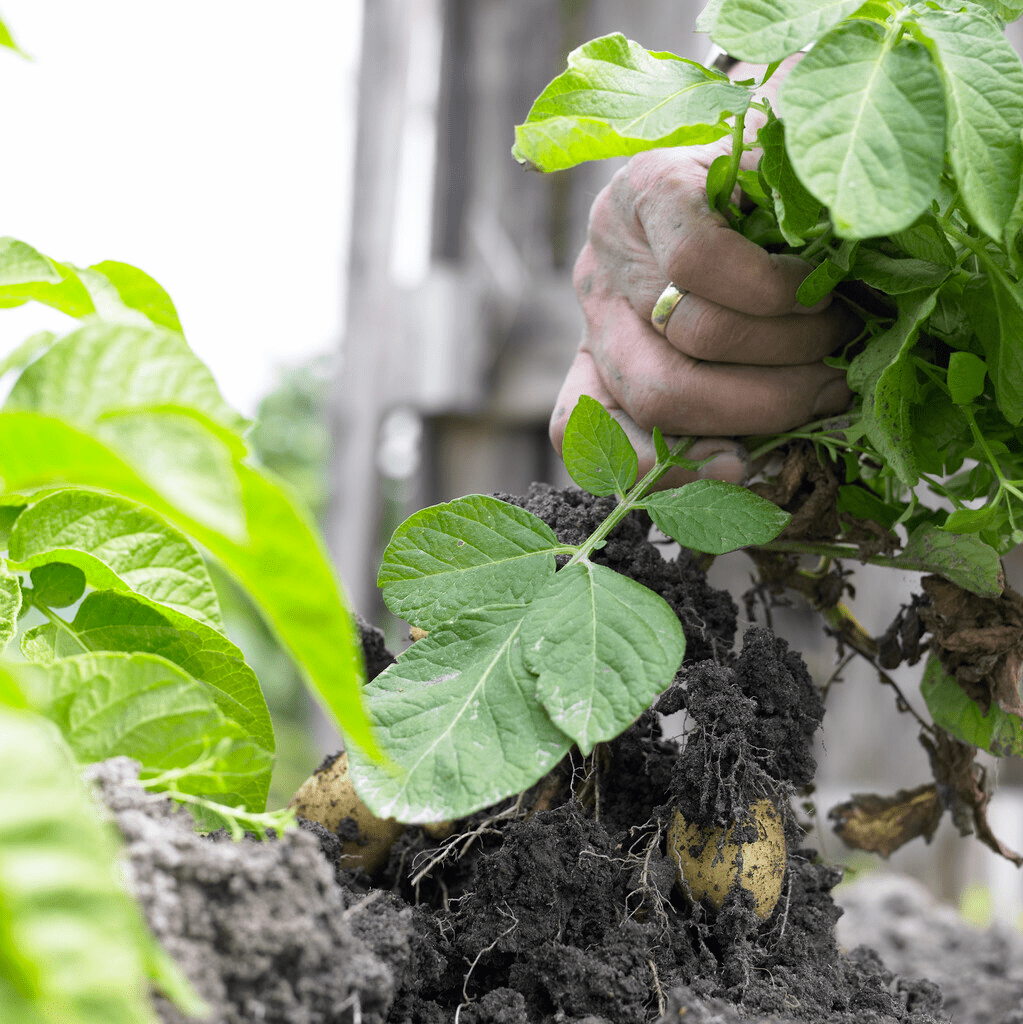
Harvest your potatoes when the plants begin to die back, usually 2-3 weeks after flowering. Gently dig them out of the soil, being careful not to pierce the skins, and allow them to dry before storing them in a cool, dark place.
Read our guides on storing and harvesting your crop.
Conclusion
In summary, growing potatoes in containers, pots, and raised beds is rewarding for beginner gardeners. You can enjoy a bountiful harvest of delicious, homegrown potatoes by understanding the basics, selecting the right containers, and following proper planting and care techniques.