
Heuchera, commonly known as coral bells, is a versatile perennial plant that adds vibrant colour and texture to any garden. Known for their striking foliage, which comes in a wide range of colours from lime green to deep purple, Heucheras are perfect for UK gardens. Whether you are new to gardening or a seasoned pro, this guide will help you grow and maintain healthy, beautiful Heuchera plants.
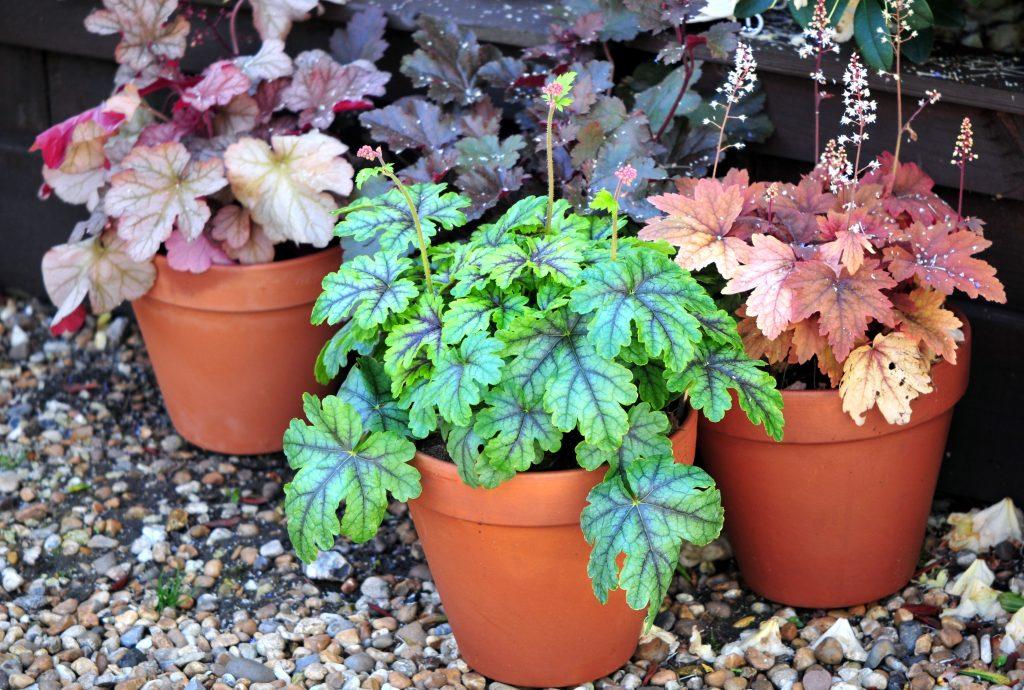
Basics to Caring for Heuchera Plants:
- Water Heuchera regularly, particularly during dry spells.
- Feed in spring to encourage vibrant foliage.
- Deadhead spent flowers to encourage new blooms.
- Prune damaged leaves in early spring to maintain plant health.
- Protect Heuchera from slugs and vine weevils.
Where to Plant Heuchera
Heuchera plants are adaptable and thrive in various garden conditions. However, for the best results, consider the following planting tips:
Shade to partial shade:
Heucheras prefer dappled shade or partial shade, making them ideal for areas where other plants might struggle. In the UK, a spot that gets morning sun and afternoon shade is perfect. However, some varieties with darker leaves can tolerate more sun, as long as they are well-watered.
Well-drained soil:
Heucheras thrive in well-drained soil. They dislike waterlogged conditions, which can cause root rot. If your garden soil is heavy clay, consider planting Heuchera in raised beds or containers to improve drainage.
Avoid exposed areas:
While Heuchera plants are generally hardy, they can suffer in very exposed, windy areas. Plant them in a sheltered spot to protect their delicate foliage from wind burn and to prevent the plant from drying out too quickly.
How to Plant Heuchera
Planting Heuchera is straightforward, and with a bit of care, they’ll thrive in your garden for years to come.
- Prepare the soil:
Mix in organic matter like compost or leaf mould to improve soil structure and drainage. Heuchera prefers slightly acidic to neutral soil but is generally quite adaptable. - Dig a hole:
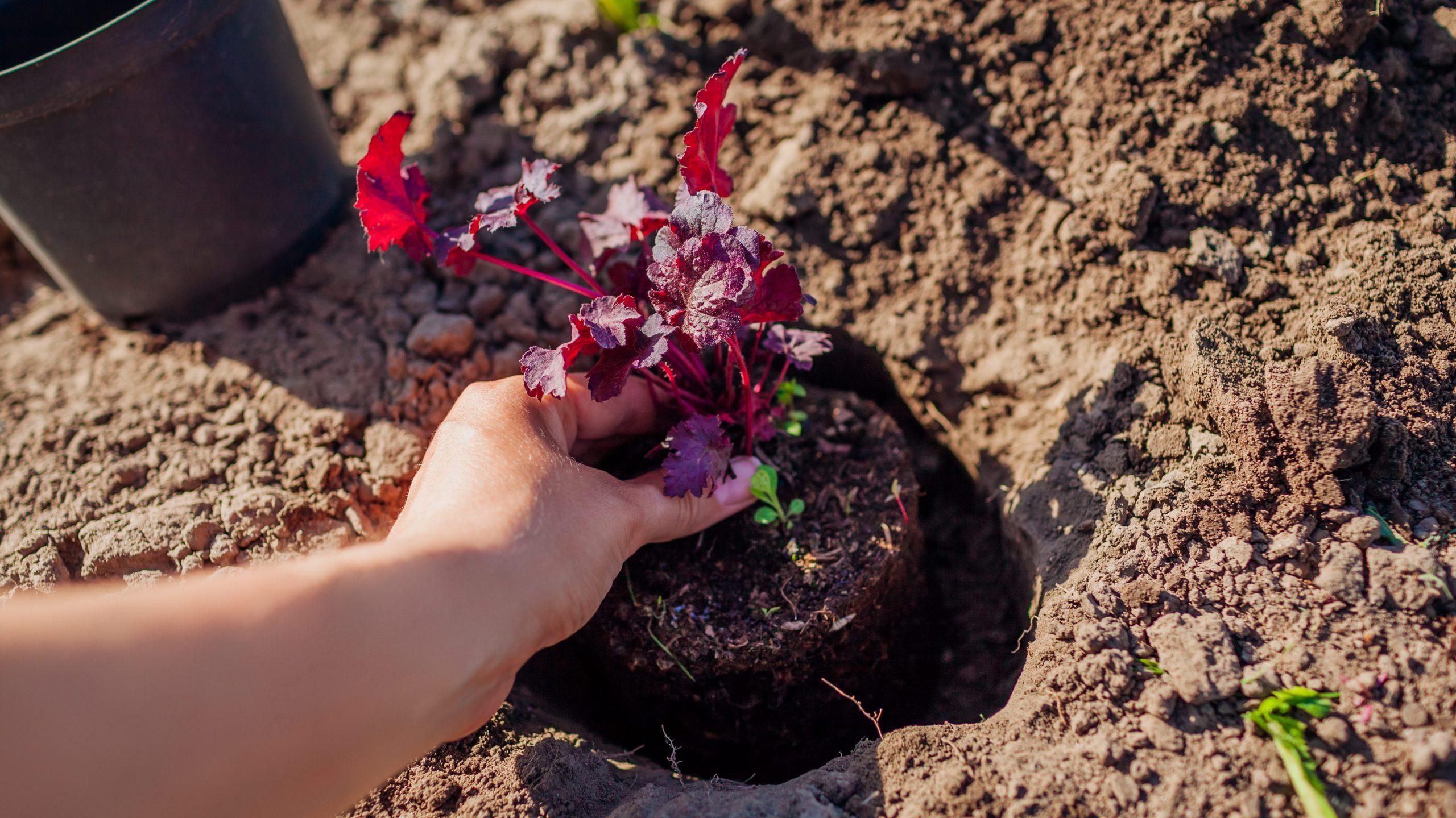
The hole should be about twice the width of the plant’s root ball and deep enough so that the crown of the plant (where the stems meet the roots) sits just above the soil level. - Plant the Heuchera:
Place the plant in the hole and backfill with soil, pressing down gently to remove air pockets. Water thoroughly after planting to help settle the soil around the roots. - Mulch:
Apply a layer of mulch around the base of the plant to help retain moisture and suppress weeds. Keep the mulch away from the crown to prevent rot.
How to Water Heuchera
Proper watering is key to healthy Heuchera plants.
How much to water:
Heuchera plants like consistent moisture but do not tolerate soggy soil. Water your Heuchera regularly during dry periods, especially in their first year as they establish. The soil should be kept evenly moist but not waterlogged.
When to water:
In the UK, rainfall generally provides sufficient moisture, but during prolonged dry spells in summer, water Heucheras thoroughly once or twice a week. Water early in the morning to allow the foliage to dry off during the day, reducing the risk of disease.
What you need:
A watering can with a rose attachment or a gentle hose setting is ideal to prevent soil erosion around the plant base. Water directly at the soil level to avoid wetting the leaves, which can lead to fungal issues.
Feeding Heuchera
Why feed Heuchera? Feeding your Heuchera plants will help them produce lush foliage and maintain their vibrant colours. Fertilising also supports the plant’s overall health, making it more resilient to pests and diseases.
When to feed:
Feed Heucheras in early spring as new growth begins. Use a balanced, slow-release fertiliser or a liquid feed. Avoid overfeeding, as this can lead to excessive foliage at the expense of flower production.
Step-by-step guide:
- Clean the area: Remove any weeds or debris from around the plant.
- Apply the feed: Scatter the fertiliser around the base of the plant, taking care not to touch the leaves. Follow the manufacturer’s instructions for the correct amount.
- Water in: After applying the feed, water the plant thoroughly to help the nutrients reach the roots.
- Mulch: Reapply mulch after feeding to retain moisture and continue to protect the plant.
How to Prune Heuchera
Pruning Heuchera is essential to keep them looking their best and to encourage healthy growth.
- Spring clean-up:
In early spring, remove any damaged or dead leaves that have accumulated over the winter. This tidies up the plant and allows new growth to emerge. - Deadheading:
Heucheras produce delicate flower spikes in late spring to early summer. Once the flowers fade, deadhead them to encourage a second flush of blooms and to prevent the plant from wasting energy on seed production. - Rejuvenation pruning:
Every few years, Heuchera plants can become woody and lose vigour. If this happens, you can divide the plant in early spring or autumn to rejuvenate it. Simply dig up the plant, divide the root ball into sections, and replant each section.
Pests & Diseases
While Heuchera plants are generally hardy, they can be susceptible to a few pests and diseases.
Vine weevils:
These pests can be a problem, particularly in container-grown Heucheras. The larvae feed on the roots, which can cause the plant to collapse. Inspect the roots in spring and autumn, and if you find any larvae, remove them by hand. Consider using biological controls like nematodes if infestations are severe.
Slugs and snails:
Young Heuchera leaves can be attractive to slugs and snails. Use barriers, traps, or organic slug pellets to protect your plants, particularly in the spring when new growth appears.
Leaf spot and rust:
In damp conditions, Heucheras can suffer from fungal diseases like leaf spot and rust. Ensure good air circulation around the plants by not crowding them, and remove any affected leaves promptly to prevent the spread of disease.