
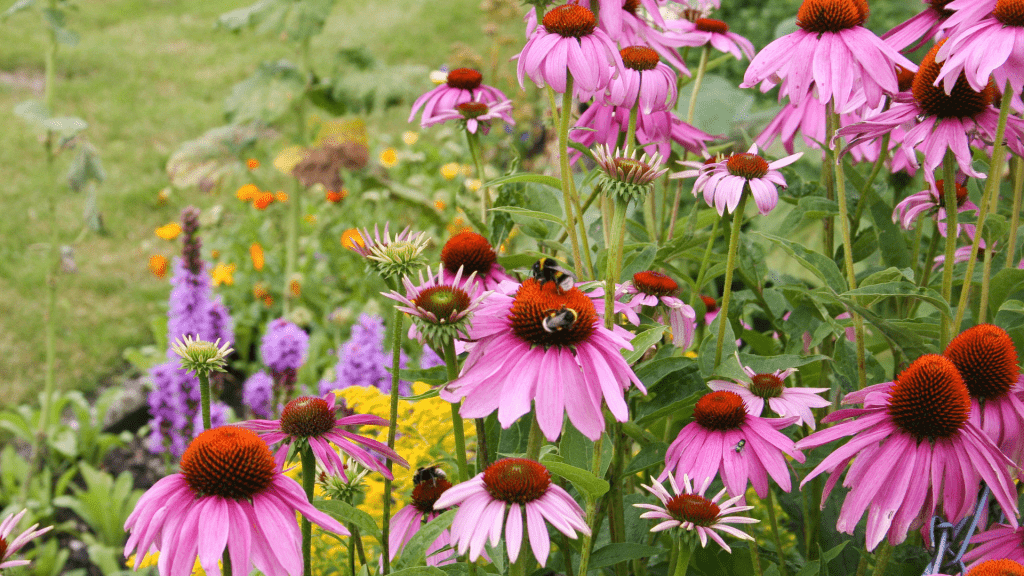
Echinaceas, also known as coneflowers, are a beloved perennial flower in UK gardens due to their vibrant, daisy-like blooms and resilience. These hardy perennials are native to North America but adapt well to the UK climate, bringing colour and pollinators to gardens. Here’s a guide on how to grow and care for Echinaceas successfully in the UK.
1. Choosing the Right Variety
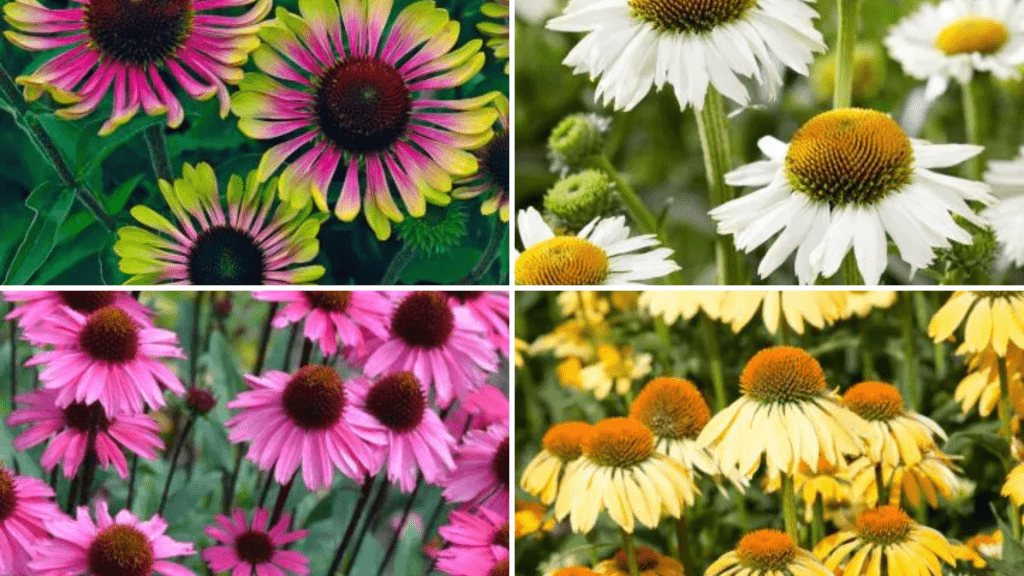
Echinaceas come in an array of colours and forms. Some popular varieties include:
- Echinacea purpurea Green Twister: This is my favourite variety of coneflower as it produces a stunning blend of petals, each with a vivid purple base contrasting against the lime green edges. This variety of echinacea flowers from June to September and stands at a height of 80 cm.
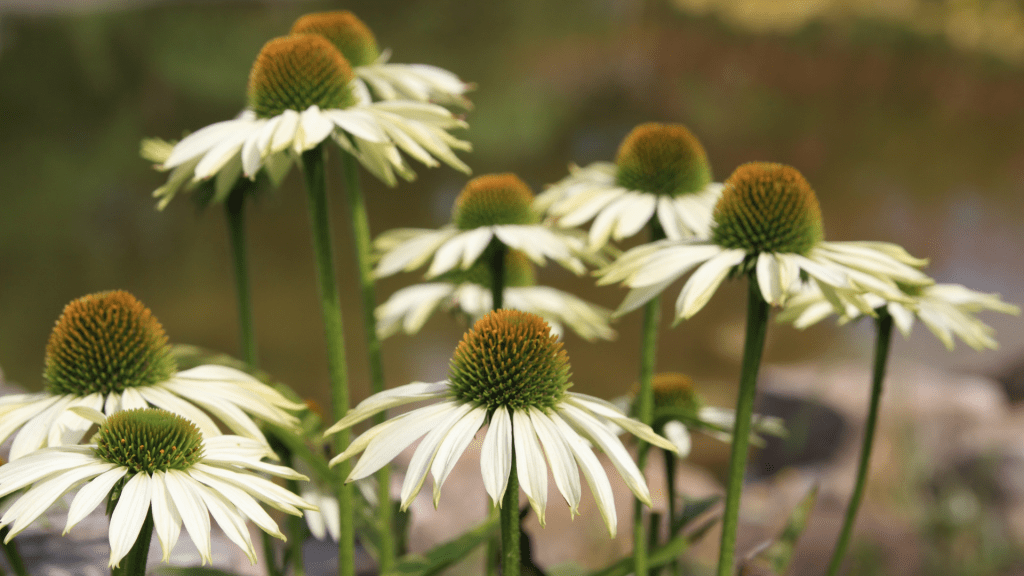
- Echinacea purpurea White Meditation: This plant grows to a height of fifty centimetres and spreads out in spring and summer before dying in autumn. It features narrow, dark green leaves. From summer to autumn, it produces numerous large white flowers with reflex petals and a central cone that starts yellow-orange and darkens to bronze with age.
- Echinacea purpurea Sensation Pink: This hardy plant blooms from summer until the first winter frosts. This striking variety features deep pink flowers encircling a large central cone, contrasting beautifully with the dark, nearly black stems that support the blooms.
- Echinacea ‘Yellow Shades’: This stunning variety is renowned for its vibrant yellow blooms that epitomise summertime cheer. The radiant yellow petals encircle a distinctive black, cone-shaped centre, drawing in bees, butterflies, and other pollinators. The plant flowers from mid-summer to early October.
2. Planting Echinaceas
When to Plant:
Spring and autumn are the best time to plant your echinaceas. Spring planting allows the plants to establish themselves before the summer heat, while autumn planting gives them time to develop roots before winter.
Location:
Echinaceas thrive in full sun, needing a minimum of six hours of direct sunlight per day. A sunny spot will ensure vigorous growth and lots of flowers to bloom.
These plants also prefer well-drained soil. They can tolerate poor soil conditions but perform best in rich, loamy soil for good drainage. Consider amending your garden soil with compost or grit to improve drainage if it is heavy clay.
How to Plant:
Time needed: 30 minutes
- Prepare the soil
Dig in plenty of organic matter, such as compost or well-rotted manure, to enrich the soil and improve its texture.
- Planting Depth
Dig a hole twice the width of the root ball and just as deep. Place the plant in the hole, ensuring the crown (where the stem meets the roots) is level with the soil surface.
- Spacing
Space your Echinaceas about 30-45 cm apart. Proper spacing ensures good air circulation, which helps prevent diseases.
3. Watering and Feeding
Watering:
After planting, water the Echinaceas thoroughly. Continue to water regularly during the first growing season to help the plants establish strong root systems. Once established, Echinaceas are quite drought-tolerant. Water them deeply during prolonged dry periods, but be careful not to overwater, as they dislike soggy soil.
Feeding:
Apply a balanced, slow-release fertiliser in early spring. This encourages healthy growth and abundant flowering throughout the season. Add a layer of mulch around the plants in spring. Mulch helps retain soil moisture, suppress weeds, and gradually adds organic matter to the soil as it decomposes.
4. Maintenance
Deadheading:
To encourage continuous blooming, remove spent flowers regularly by cutting the stem just above the first set of healthy leaves. If you want to attract birds to your garden, consider leaving some seed heads on the plants through autumn and winter. Birds, especially finches, enjoy eating the seeds.
Pruning:
Cut back the stems to the ground after the first hard frost in autumn. This tidies the garden and prepares the plants for the next growing season. Alternatively, you can leave the stems standing over winter to provide structure to the garden and prune them back in early spring.
Dividing:
Divide large clumps every 3-4 years to rejuvenate the plants and propagate new ones. The best time to divide Echinaceas is in early spring or autumn.
Dig up the entire clump, then divide it into smaller sections with a sharp spade or knife. Each section should have several shoots and a good amount of roots. Replant the divisions immediately and water them well.
5. Pests and Diseases
Common Issues:
- Powdery Mildew: This fungal disease is a white, powdery leaf coating. To prevent it, ensure good air circulation around the plants and avoid overhead watering. If mildew appears, remove affected leaves and apply a fungicide if necessary.
- Aphids and Slugs: Aphids can be controlled by spraying with a strong jet of water or using insecticidal soap. Slugs can be a problem, especially in wet weather. Use slug traps, barriers, or organic slug pellets to protect your plants.
Preventative Measures:
- Healthy Soil: Maintain healthy soil by adding organic matter and ensuring good drainage.
- Watering Practices: Water at the base of the plants rather than from above to keep the foliage dry and reduce the risk of fungal diseases.
- Crop Rotation: To reduce the build-up of soil-borne diseases, avoid planting Echinaceas in the same spot year after year.
6. Winter Care
In late autumn, apply a thick layer of mulch (such as straw, leaves, or compost) around the base of the plants. This helps protect the roots from frost and temperature fluctuations.
Reduce watering as the plants go dormant in winter. Ensure the soil is not waterlogged to prevent root rot.
7. Companion Planting
Echinaceas make excellent companions for a variety of other perennials. They pair particularly well with the following:
- Rudbeckia (Black-Eyed Susan): Their similar bloom times and complementary colours create a striking display.
- Salvias: Salvias’s spiky flowers contrast nicely with Echinaceas’s rounded blooms.
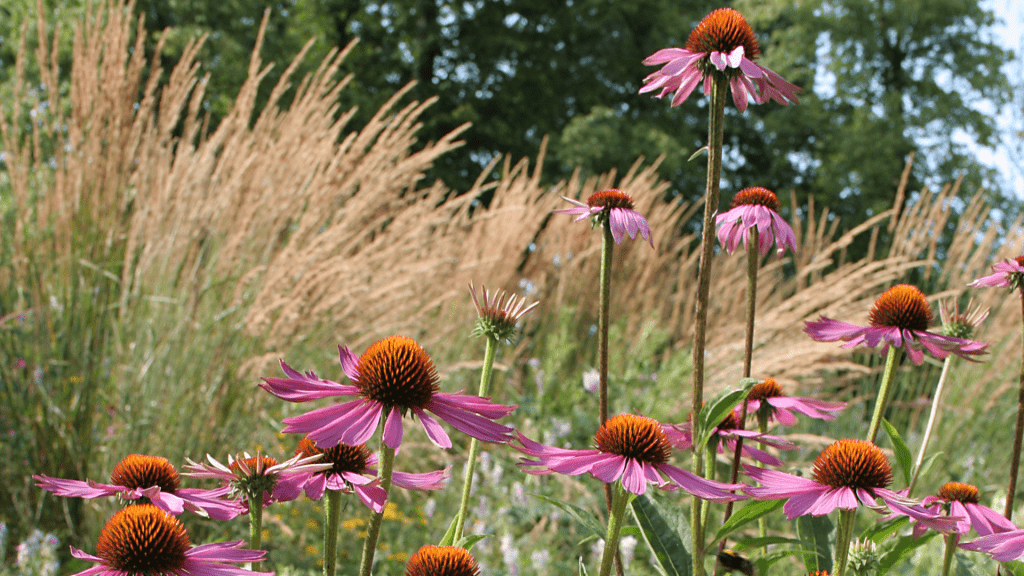
- Ornamental Grasses: The delicate textures of grasses like Miscanthus or Pennisetum provide a beautiful backdrop for Echinaceas.
Echinacea are quite versatile and can be grown alongside a variety of fruits and vegetables. They prefer well-drained soil and full sun, so you’ll want to choose companion plants that have similar needs. Here are some good options:
- Tomatoes: They both enjoy full sun and well-drained soil. The vertical growth of tomatoes can complement the height of Echinacea.
- Peppers: Like tomatoes, peppers thrive in similar conditions and can benefit from the same care.
- Herbs: Herbs such as basil, oregano, and thyme can grow well with Echinacea. They typically have similar light and soil needs.
Avoid planting Echinacea next to plants that require heavy shade or very moist soil, as these conditions may not be ideal for the flowering plant.